全文記事
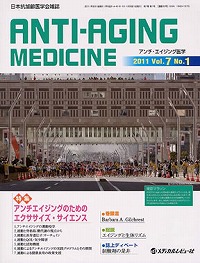
アンチエイジングのためのエクササイズ・サイエンス
4 運動とQOL・気分障害
Effects of Exercise on QOL and Mood Disorder
購入する
販売サイト「MeReBo」へ
- 掲載誌
- アンチ・エイジング医学 Vol.7 No.1 36-40, 2011
- 著者名
- 永松俊哉
- 記事体裁
- 特集 / 全文記事
- 疾患領域
- 精神疾患 / アンチエイジング
- 診療科目
- 老年科 / 心療内科 / 精神科
- 媒体
- アンチ・エイジング医学
Summary
The aim of anti-aging medicine is to promote healthy aging with increased quality of life (QOL). QOL is a widely used term that refers to an overall sense of well-being, including aspects of happiness and satisfaction with life as a whole. More specifically, health-related QOL (HRQOL) includes perceptions of physical and mental health and their correlates, including health risks and conditions, functional status, social support, and socioeconomic status. It is important to maintain a high level of activity until the end of life while simultaneously maintaining functional independence both physically and mentally with good HRQOL. Exercise is well known to be effective for the improvement of physical fitness, the promotion of health, and the prevention of noncommunicable diseases. In recent years, the efficacy of exercise for the reduction of stress, depression, and emotional problems has also shown remarkable progress. People who engage in sports or recreation activities are expected to be able to acquire advanced HRQOL, as evidenced by establishing positive human relationships within their communities and exhibiting happiness and satisfaction with life as a whole. The utilization of exercise in anti-aging science is expected to increase in the future.
※記事の内容は雑誌掲載時のものです。