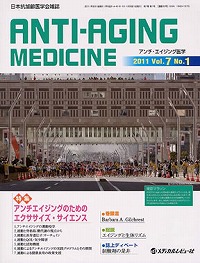
全文記事
アンチエイジングのためのエクササイズ・サイエンス
2 運動と骨格筋:糖代謝の視点から
Effects of Exercise on Glucose Metabolism in Skeletal Muscle
購入する
販売サイト「MeReBo」へ
- 掲載誌
- アンチ・エイジング医学 Vol.7 No.1 25-31, 2011
- 著者名
- 川中健太郎
- 記事体裁
- 特集 / 全文記事
- 疾患領域
- 循環器 / 代謝・内分泌 / 糖尿病 / 骨・関節 / アンチエイジング
- 診療科目
- 一般内科 / 糖尿病・代謝・内分泌科 / 老年科
- 媒体
- アンチ・エイジング医学
Sammary
Aging is associated with increased abdominal fat, reduced physical activity, decreased basal metabolic rate, and skeletal muscle mitochondrial dysfunction. These age-related alterations cause insulin resistance in skeletal muscle, which contributes to the development of type 2 diabetes. Exercise is often recommended to older individuals as a means to improve insulin sensitivity in skeletal muscle, thereby preventing the development of type 2 diabetes mellitus. Exercise improves insulin sensitivity in skeletal muscle in part by reducing abdominal fat. Increased function and content of GLUT4 and mitochondria in skeletal muscle also contribute to the improvements in insulin sensitivity with exercise. It may be possible that the nature and the magnitude of changes in muscle insulin sensitivity differ between different types of exercise, e.g. aerobic and resistive exercise. A better understanding of this possibity will permit the development of more effective exercise regimens in the treatment and prevention of insulin resistance and type 2 diabetes in older adults.
※記事の内容は雑誌掲載時のものです。